Sizing
Tailoring students at a trade school, 1955, Sweden. (digitaltmuseum.se)
Stress-Free
No need to try on a dozen trousers that don't fit--
just let me do the work.
Inclusivity
No matter who you are, what gender you identify with, your size, your height-- I am happy to accommodate you.
Measuring Yourself
Need help? Schedule an appointment, and I'll walk you through the process.
First, get comfortable.
Start with a flexible tape measure and something to write these down on.
Wear the undergarments you plan to wear with your piece. Your favorite bra, boxers, or anything that might alter the shape or size of your body.
When measuring for a corset, wear a comfortable, no-padded bra (if you have a larger than b cup chest).
Don't try to take these measurements with bulky or padded clothing. Sweatshirts off for now!
Circumference
Chest
This one is taken at the apex-- or the largest part of your chest. For most, this is right over the nipples (you can laugh!!).
Wrap the measuring tape around yourself, and relax.
Take a few deep breaths and let your chest expand, loosely holding the tape so it accurately shows your most comfortable, accurate size.
If you need the under-bust measurement, simply move the tape down and measure directly under the breast, taut against the rib cage.
Waist
This is one of the things that is unnecessarily gendered, so there are two ways of doing this, depending on the fit you want.
For the dresses in my collection, you need the measurement for your natural waist. This might be higher than you are used to, and should be right above your hipbones. You can lean from side to side at the waist and find the crease, wrap the measuring tape around, and take a deep breath. Allow your stomach to expand comfortably, and hold the tape loosely so it shows the accurate, comfortable measurement.
Your trouser waist is often lower, and ultimately is based on your own preferences. Wherever you want the waistband to sit, or wherever it already sits, should be the place you measure.
Hip
The hip (sometimes called the seat) is measured around the largest part of your thighs and butt.
You should also try sitting with the measuring tape still wrapped around you, that way you can ensure the fit is comfortable even while sitting.
Additional
Neck
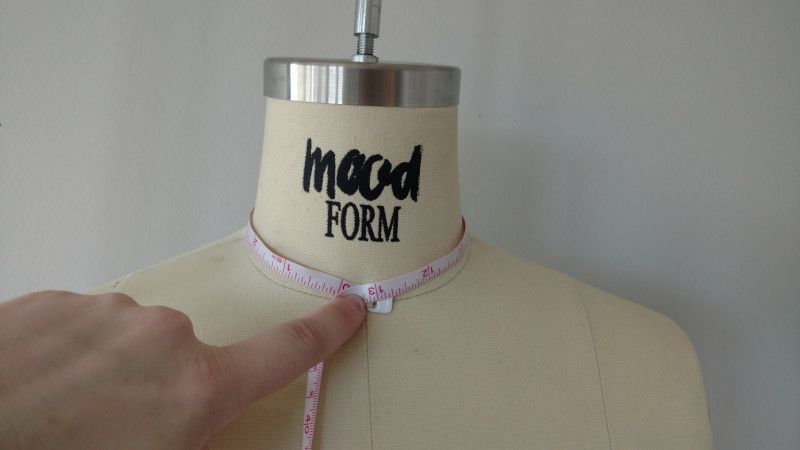
For collars.
Unless specified, this should be snug but NOT TIGHT.
Armscye
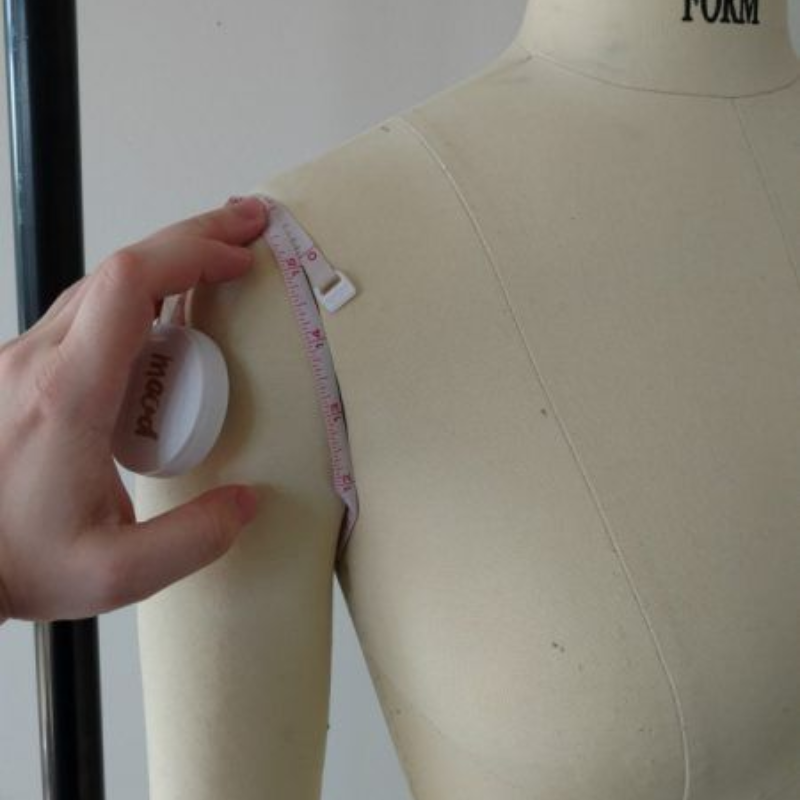
For many items with sleeves.
Measure around the arm at the shoulder. Easiest if you have someone to help you, and with your arm out to the side.
Bicep
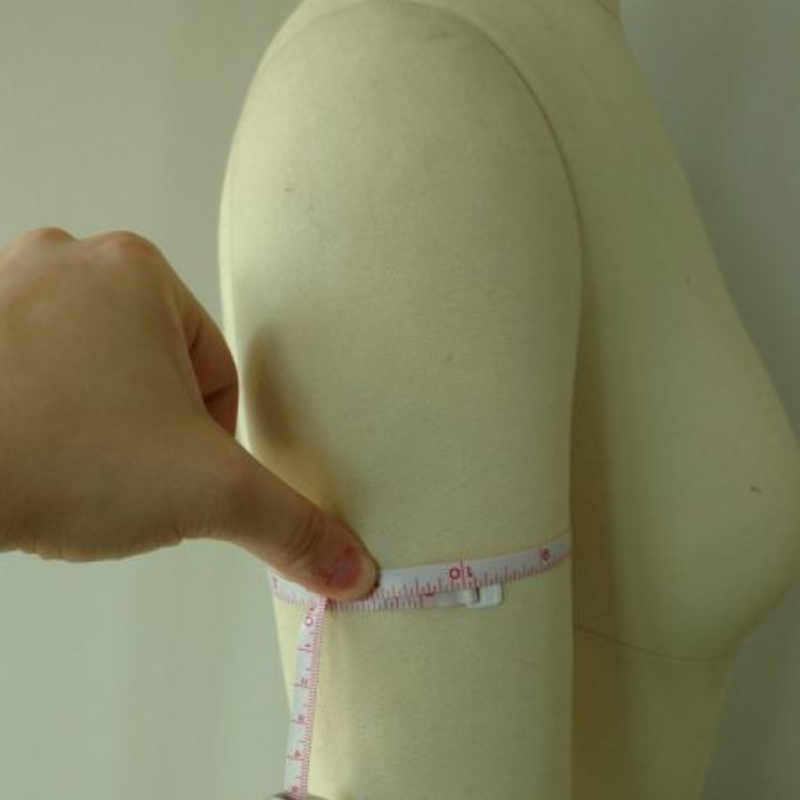
Measure around the widest part of the bicep, with your elbow bent and your fist clenched.
Wrist
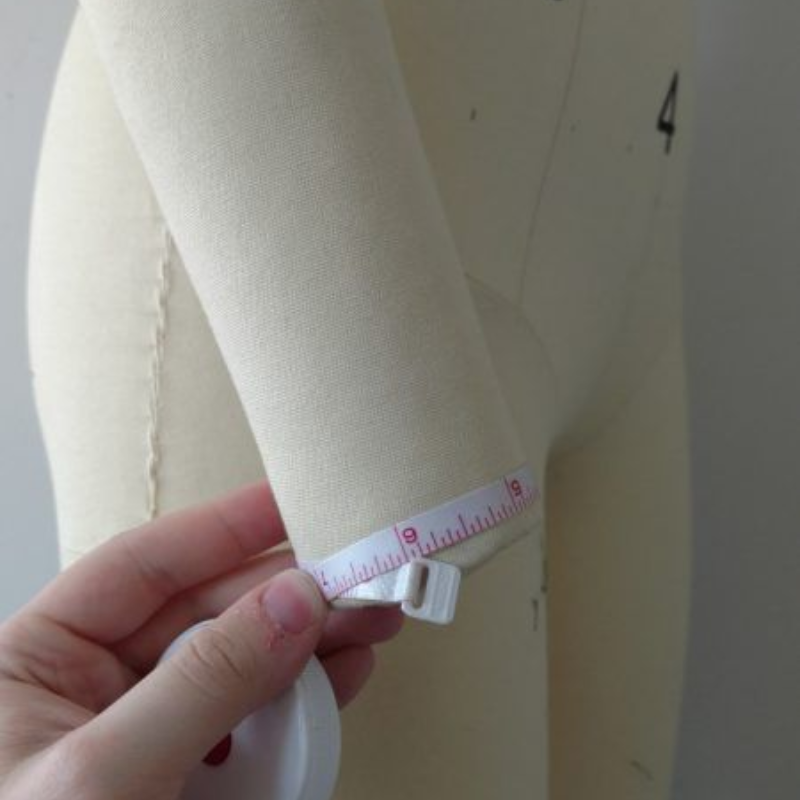
Narrowest part of the wrist.
Thigh
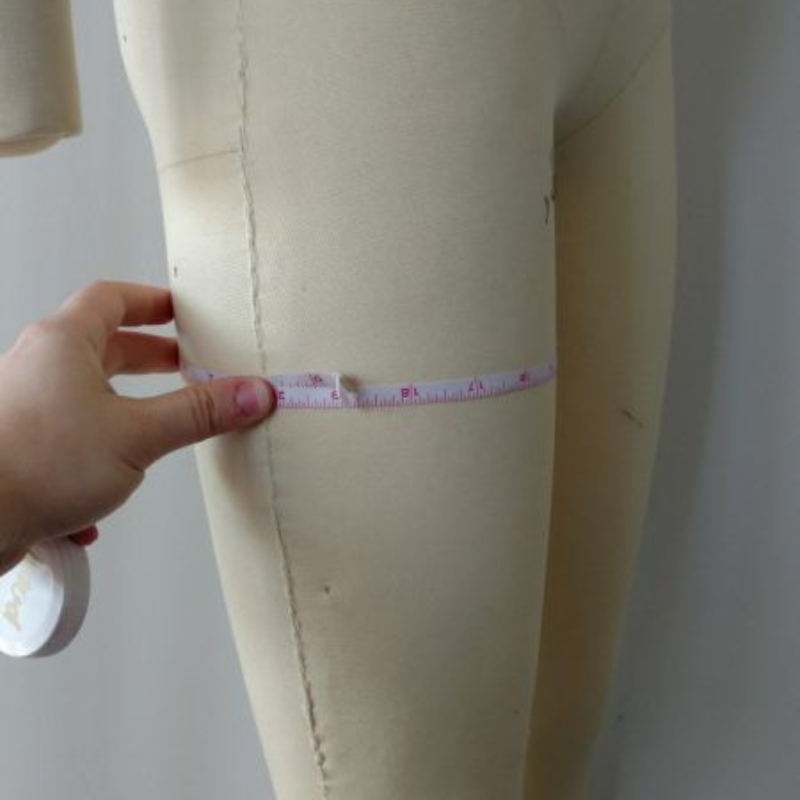
Measure around the top third of the thigh while sitting down. (Most people’s thighs flatten out a bit when they’re sitting, and an oval has a larger perimeter than a circle of the same area.)
Calf
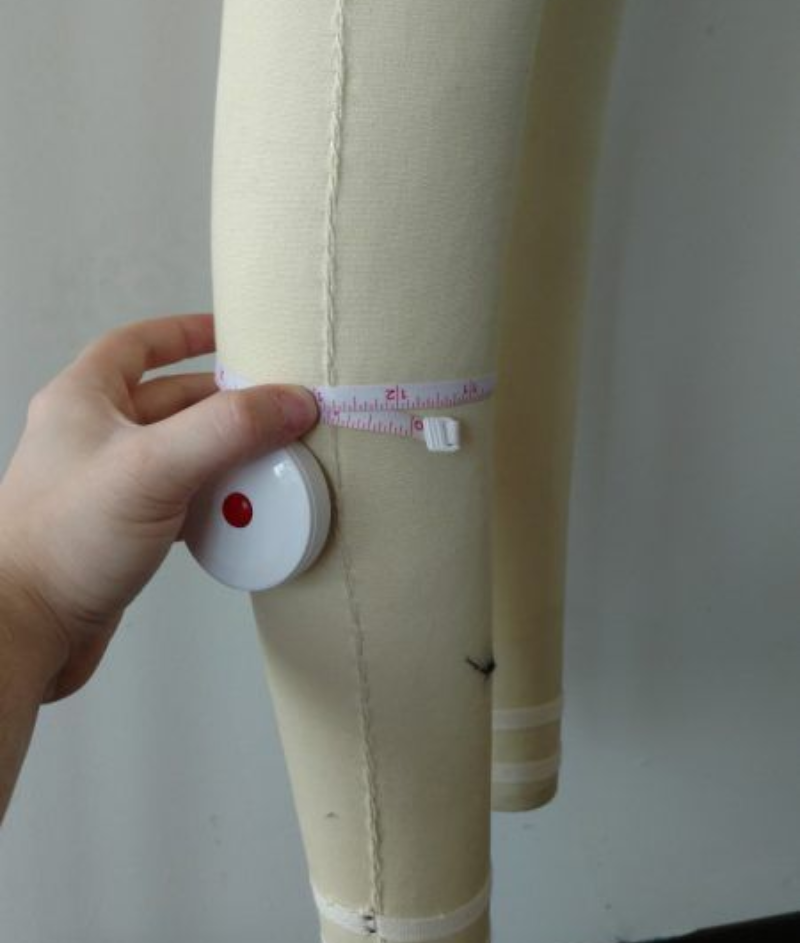
Measure at the widest part of the calf muscle.
Lengths
Neck to Waist
Measured from the base of the neck to the natural waist.
It can be done on yourself, but it helps to have a friend do it.
The distance measured from the center back of the neck to the front natural waist. (Measure while relaxed and in your natural posture)
The distance measured from the center back of the neck to the front apex (largest part of the breast).
Outseam
Wearing the shoes you plan to wear with this garment, tautly measure the distance from the garment's waistline to the floor, or the desired hem of the garment.
For trousers, subtract an inch or two, depending on how long you would like them to be.
For skirts and dresses, measure from the waist to your desired length.
You might need someone to help with this; it's easy to mess up when measuring it yourself.
Outsleeve
The distance is measured from the center back of the neck,
to the shoulder,
to the elbow,
to the wrist. (or the desired sleeve hem)
Additional Lengths
Front Neck to Waist
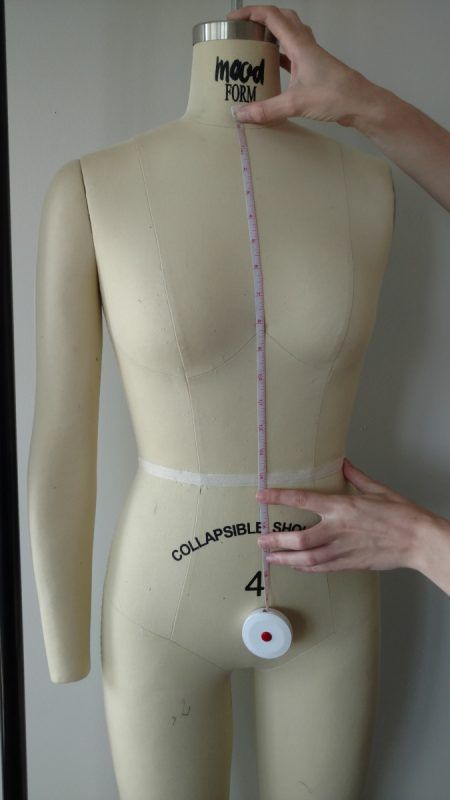
The distance from the hollow at the base of the throat to the natural waist. May or may not be the same as the back length.
Sleeve
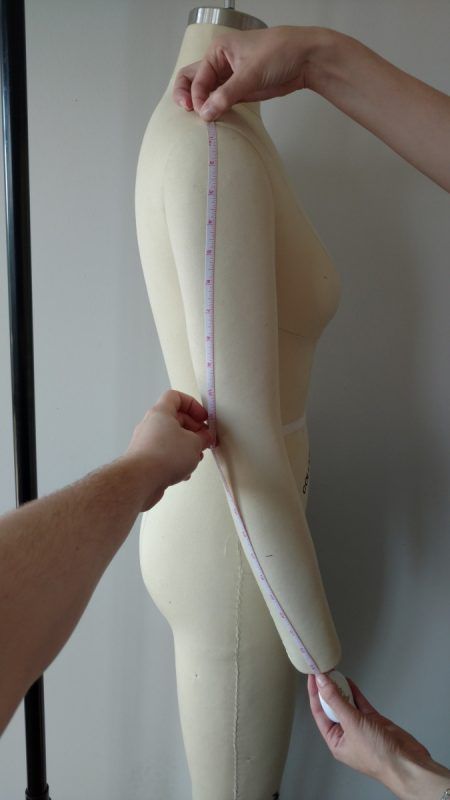
Measured from the bone at the top of the shoulder to the wrist, with the arm down and slightly bent. Difficult to do on oneself, so ask a friend for help.
Inseam
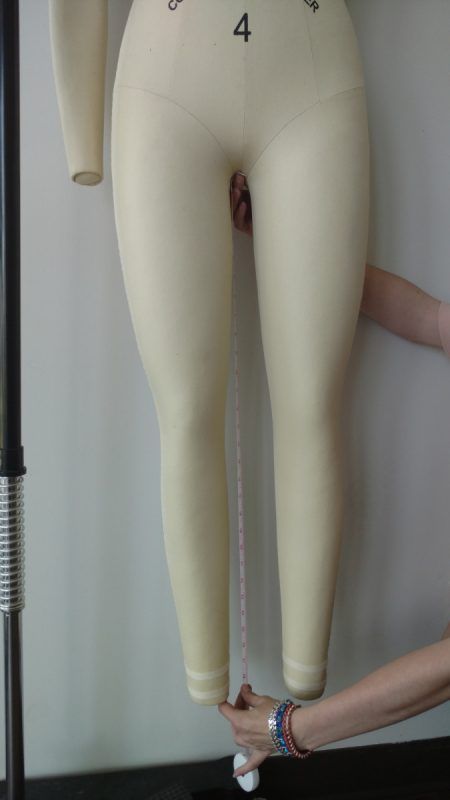
Wearing the shoes you plan to wear with this garment, measure the distance from the top of the crotch to the floor, or the desired hem of the garment.
This is generally a two-person job, so have the person being measured hold the end of the tape at the crotch level while the other person reads off the number.
Full Rise
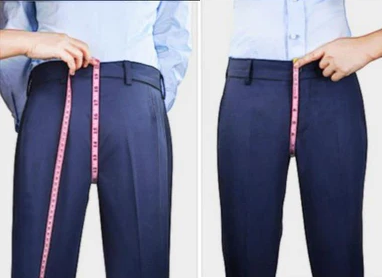
From the front waist to the back. Start measuring at the front waist. Bring the tape measure down, through the legs, and up the back rise until you get to the waist point on the back.
Widths
Shoulder Width
From the bone at the top of the shoulder, across the back of the neck, to the other bone at the top of the shoulder.
Additional Widths
Slope
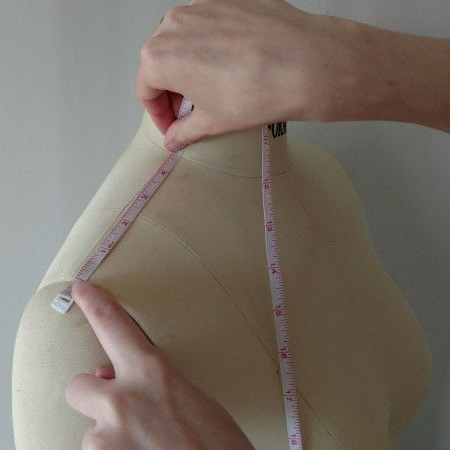
The distance from the side of the neck to the bone at the end of the shoulder.
Shoulder to Apex
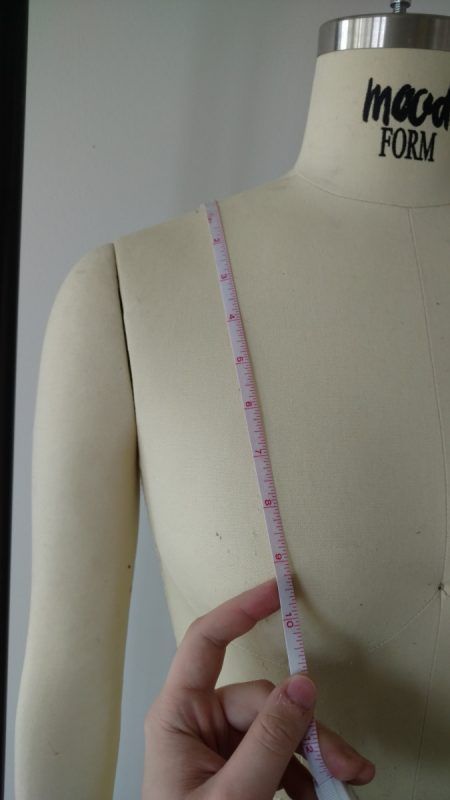
The distance from the middle of the shoulder to the highest point of the breast on the same side.
Apex to Apex
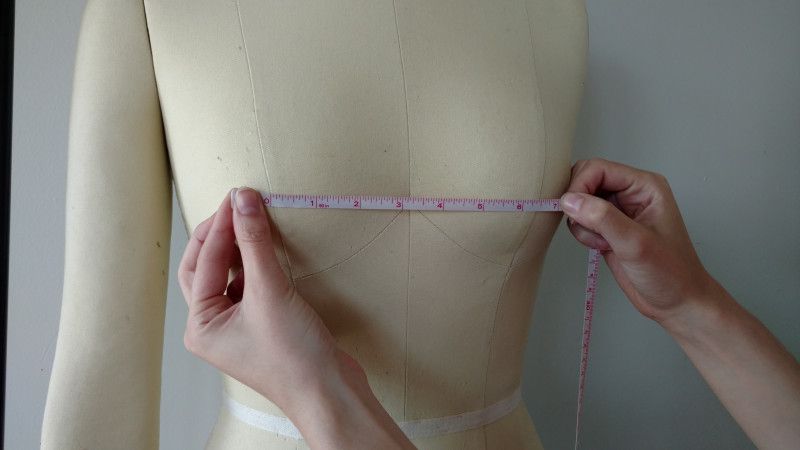
The distance from the highest point of one breast to the highest point of the other.
Apex to Waist
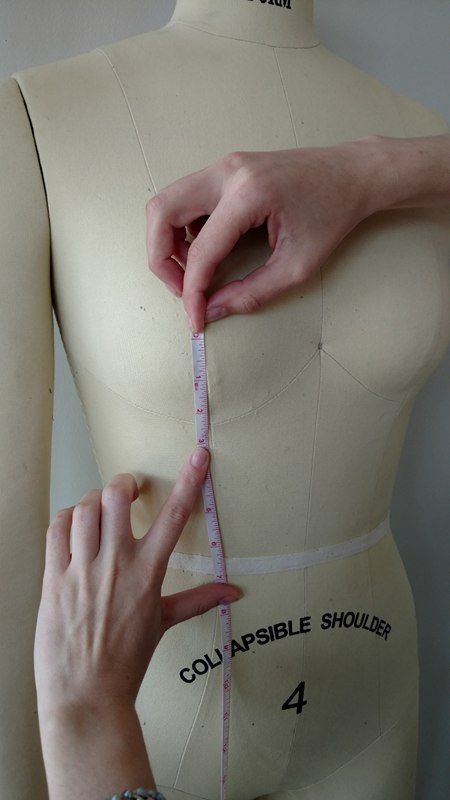
The distance from the highest point of the breast to the natural waist. Remember not to bend over while measuring this.